Boiler won’t fire
Ignition, flame sensing, the gas valve, a tripped low-water cutoff or a failed control. Each is tested in turn until the cause is found.
Green Leaf Heating & Cooling connects Chicago homeowners with local technicians for boiler repair in bungalows, two-flats, greystones and courtyard buildings: cold radiators, banging pipes, a boiler that won’t fire or keeps losing pressure. Call (312) 924-7223 and get a free estimate before any work starts.

Radiator heat is everywhere in Chicago’s older housing. Many bungalows run on hot-water boilers, and many greystones, two-flats and courtyard buildings still heat with steam. The two systems work differently and fail differently, so the first job is knowing which one you have.
A hot-water boiler pumps heated water through the radiators and back, and its gauge usually reads somewhere around 12 to 25 psi. A steam boiler boils water and sends steam up to the radiators at very low pressure, usually under 2 psi, with a glass sight tube on the side showing the water level.
The technicians we connect you with repair both, along with radiators, valves, vents, circulator pumps and radiant floor systems. If a boiler is beyond repair, they can explain replacement options too, from a new cast iron boiler to a high-efficiency condensing model.
The boiler problems that come up most in Chicago homes and what usually causes them.
Ignition, flame sensing, the gas valve, a tripped low-water cutoff or a failed control. Each is tested in turn until the cause is found.
On hot-water systems, usually trapped air or a circulator problem. On steam, often a stuck radiator vent or a valve left half open.
On steam systems, water hammer from condensate pooling in pipes that have lost their pitch. Re-pitching or a new vent usually fixes it.
A hot-water boiler that keeps dropping pressure has a leak somewhere, in the boiler, a pipe, a radiator valve or the relief valve.
Often a waterlogged expansion tank that no longer absorbs the water’s expansion, pushing pressure up until the valve opens.
A seized pump or a stuck zone valve leaves part of the house cold while the boiler runs normally.
Steam boilers lose water as they run. Rapid water loss, a jumping sight glass or wet steam point to a leak or dirty boiler water.
Cold zones, noisy loops or a mixing valve problem in hot-water radiant floors, common in renovated basements and newer additions.
Say whether the heat is steam or hot water if you know, which radiators are cold, and whether you hear banging or see water.
The technician checks the flame, venting, carbon monoxide, water level or pressure and the safety controls first.
The boiler and the system around it are tested until the cause is found. You get the options and a free estimate for each.
Once you approve, the repair is made and the system is run until every radiator heats, then checked again.
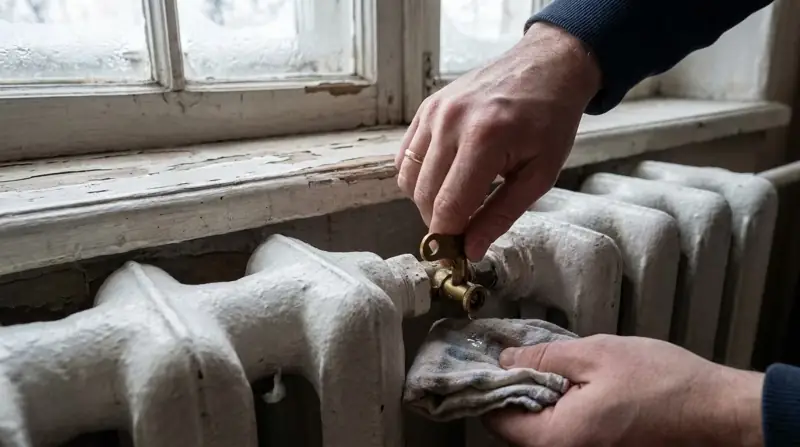
Say whether the heat is steam or hot water if you know, which radiators are cold, and whether you hear banging or see water.
You can usually tell in a minute by looking at the boiler and the radiators:
| Hot-water (hydronic) | Steam | |
|---|---|---|
| On the boiler | Pressure/temperature gauge reading roughly 12–25 psi, an expansion tank nearby, a circulator pump on the piping | A glass sight tube showing the water level, a low-pressure gauge (0–3 or 0–5 psi), a pressure control |
| On the radiators | A small bleed screw near the top | A bullet-shaped air vent on the side (one-pipe steam), or a trap at the outlet (two-pipe) |
| Typical sounds | Gurgling when air is trapped | Hissing vents as steam arrives; banging if water pools in the pipes |
| Common in | Bungalows, Georgians and many single-family homes | Greystones, two-flats, courtyard buildings and older single-family homes |
If some radiators are cold at the top, they may have trapped air. Our guide to bleeding a radiator walks through it. Check the boiler gauge afterwards: bleeding releases water, and a hot-water system that drops too low needs topping up, which is a job for a technician if you’re not sure how your fill valve works.
Look at the sight glass. The water should sit roughly a third to half way up. If it’s empty, turn the boiler off and let it cool before calling; adding cold water to a hot, dry steam boiler can crack it. On one-pipe steam radiators, the valve should be fully open or fully closed. A half-open valve traps water and causes banging.
Boiler leaking a lot of water, or a carbon monoxide alarm sounding? Turn the boiler off at its switch. If the alarm is sounding or you smell gas, get everyone outside and call Peoples Gas or 911 first.
Cast iron boilers often last 20 to 35 years or more, and plenty of Chicago boilers are older than that. Replacement is worth discussing when the boiler’s sections are leaking, the heat exchanger is cracked, parts are no longer available, or repairs keep coming back. Newer condensing boilers suit hot-water systems best; steam systems need a steam boiler. Read more in steam vs hot-water boilers in older Chicago homes.
The radiator complaints that come up every winter in Chicago’s older buildings.
Ask a proTrapped air on a hot-water system. Bleeding the radiator usually fixes it, but air that keeps coming back means a leak or a failing vent.
Often a zone valve, circulator or balancing issue where one boiler serves both floors. The fix depends on how the piping is laid out.
Steam water hammer from sagging pipes or half-open radiator valves. It isn’t just noise; repeated hammering can damage fittings.
Short answers to what Chicago homeowners ask most before they call.
(312) 924-7223On hot-water systems, the usual causes are trapped air, low pressure, a failed circulator pump or a stuck zone valve. On steam systems, look at clogged radiator vents, low water or a boiler that isn’t building steam. Read why a boiler won’t heat the radiators for more.
A hot-water boiler typically runs around 12 to 15 psi cold and up to about 25 psi hot, depending on the building’s height. A steam boiler runs at very low pressure, usually under 2 psi. A reading well outside those ranges should be checked.
It’s usually water hammer, not an immediate danger, but the repeated shock can loosen fittings and damage valves over time. Check that the radiator valve is fully open and that the radiator tilts slightly toward the valve.
Cast iron boilers often last 20 to 35 years or more with yearly service. High-efficiency condensing boilers have a shorter typical life and need regular cleaning.
Yes. When a repair no longer makes sense, the technician can quote a replacement sized to your home’s radiators, either a cast iron boiler or a condensing model for hot-water systems.
Once a year before the heating season. Steam boilers also need the low-water cutoff checked and the water kept clean. See boiler and HVAC maintenance.
Call (312) 924-7223, tell us what the radiators are doing, and get a free estimate before any work starts.
Call NowGreen Leaf Heating & Cooling connects Chicago homeowners with local HVAC technicians. Repairs and installations are carried out by the independent technicians we connect you with.