Central air with existing ducts
An outdoor condenser and an indoor coil on top of the furnace, using the ducts you already have.
Green Leaf Heating & Cooling connects Chicago homeowners with local technicians for air conditioning installation: replacing a worn-out central air system, adding AC to a home that never had it, or cooling a radiator-heated house with no ducts. Call (312) 924-7223 and get a free estimate before any work starts.
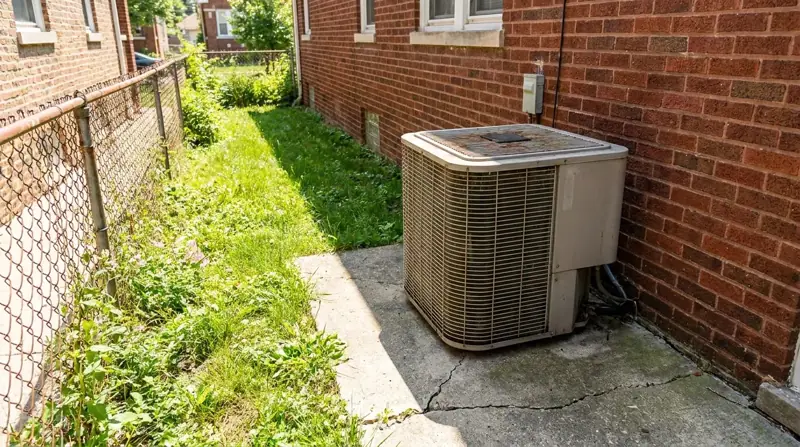
How AC goes into a Chicago home depends on what the home already has. A house with a furnace and ducts can take a standard central air system. A bungalow or two-flat heated by radiators has no ducts, so the choice is between a high-velocity system and ductless mini splits.
Either way, sizing comes first. An oversized air conditioner cools the air quickly but shuts off before it removes humidity, leaving the house cold and clammy, which is a real problem in a humid Chicago July. A technician sizes the system from the house, not from the old unit’s label.
New central air systems are rated in SEER2. Higher ratings use less electricity, and since 2025 most new systems use newer refrigerants such as R-454B or R-32 in place of R-410A. The technician explains what each option means for your home and gives you a free estimate for each.
The cooling systems that fit Chicago’s housing, and where each one makes sense.
An outdoor condenser and an indoor coil on top of the furnace, using the ducts you already have.
A new condenser and matched indoor coil, with the refrigerant lines checked or replaced and the system charged to the maker’s specs.
Small flexible ducts snake through closets, walls and the attic, ending in small round vents. Built for homes heated by radiators.
An outdoor unit feeds wall-mounted heads in individual rooms. No ducts at all. See mini splits.
A heat pump cools exactly like an air conditioner and also heats. Worth comparing if you’re replacing an AC anyway.
For homes with a finished upstairs, an air handler in the attic can serve the second floor, which often runs hottest.
The technician measures the house, checks the electrical panel, the furnace or air handler, the ducts, and where the outdoor unit can go.
You get options sized for the house, with what each includes and a free estimate. Nothing is ordered until you decide.
The condenser is set on a pad or bracket, the coil, refrigerant lines, electrical disconnect and drain are installed, and the system is charged.
Pressures, temperatures and airflow are checked, and you’re shown the thermostat settings and filter.
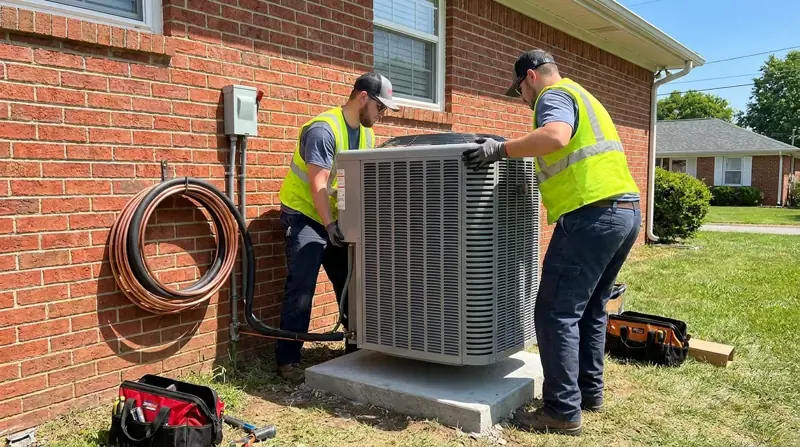
The technician measures the house, checks the electrical panel, the furnace or air handler, the ducts, and where the outdoor unit can go.
This is one of the most common Chicago projects. With no ducts to use, a high-velocity system runs flexible two-inch tubing through closets, attics and wall cavities with very little demolition, while ductless mini splits skip ducts entirely. Our guide on adding central air to a Chicago bungalow with radiators compares the two, and mini splits vs central air for two-flats covers multi-unit buildings.
The free estimate after a visit depends on the system type, its size and efficiency, whether ducts need to be added or changed, the length of the refrigerant lines, electrical work, and how easy it is to reach the attic or install location. Utilities such as ComEd have offered rebates on qualifying high-efficiency cooling; check current programs.
Short answers to what Chicago homeowners ask most before they call.
(312) 924-7223Yes. A high-velocity system uses small flexible ducts that fit through closets and attics, and ductless mini splits need no ducts at all. A technician can tell you which suits the house.
It depends on the home’s heat gain: insulation, windows, sun exposure and layout, not square footage alone. An oversized unit leaves the house humid, so sizing should be calculated.
A straight replacement is usually done in a day. A new system with ductwork or a high-velocity install can take several days.
If the furnace is also near the end of its life, replacing both lets the blower and coil be matched for efficiency. If the furnace is newer, it can usually stay.
Installing new central air in Chicago generally requires a city permit. The installer normally pulls it; confirm when you get your estimate.
Call (312) 924-7223 for a home assessment and a free estimate on AC installation options.
Call NowGreen Leaf Heating & Cooling connects Chicago homeowners with local HVAC technicians. Repairs and installations are carried out by the independent technicians we connect you with.